The Next Evolution of Intelligent Connectivity
6G Wireless Is Coming! And It Will Redefine Connectivity
From immersive digital experiences and AI-powered networks to real-time holographic communications and autonomous systems, 6G is expected to become the foundation of the next intelligent digital revolution.
What Is 6G?
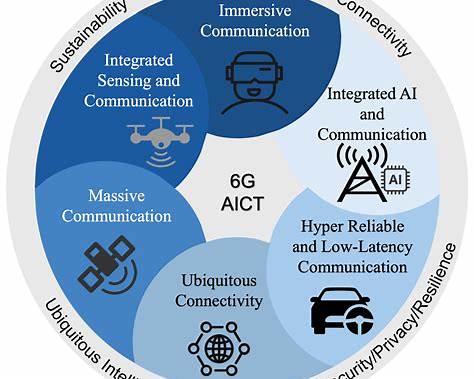
6G, or sixth-generation wireless technology, is the next evolution beyond 5G. While 5G introduced ultra-fast mobile broadband, low latency, and massive IoT connectivity, 6G is expected to merge communications, artificial intelligence, sensing, automation, and immersive digital experiences into one intelligent wireless ecosystem.
Industry experts anticipate commercial deployment of 6G networks sometime around 2030.
6G is expected to dramatically increase:
- Wireless speed
- Network intelligence
- Real-time responsiveness
- Device density
- Security capabilities
- Autonomous communications
- Environmental sensing
- Human-to-machine interaction
Quick Facts About 6G:
- Expected around 2030
- Speeds potentially reaching 1 Tbps
- AI-native networking
- Sub-millisecond latency
- Integrated sensing capabilities
- Support for holographic communications
- Massive autonomous systems support
Industries Likely to Be Most Impacted:
- Healthcare
- Manufacturing
- Transportation
- Energy
- Retail
- Education
- Smart Cities
- Defense
- Logistics
- Financial Services
Estimated 6G Capabilities
| Technology | Typical Speeds | Latency | Key Focus |
|---|
| 4G LTE | Up to 100 Mbps | 30-50 ms | Mobile broadband |
| 5G | Up to 10 Gbps | 1-10 ms | Smart connectivity |
| 6G (Expected) | Up to 1 Tbps | Sub-millisecond | Intelligent autonomous ecosystems |
Key Technologies Behind 6G:
Artificial Intelligence Native Networks
Unlike previous wireless generations, 6G is expected to integrate artificial intelligence directly into the network itself.
AI-driven networking may allow:
Self-optimizing networks
- Predictive maintenance
- Automated cybersecurity response
- Dynamic bandwidth allocation
- Intelligent traffic management
- Autonomous system coordination
Terahertz Spectrum (THz):
6G is expected to utilize extremely high-frequency terahertz spectrum bands to deliver massive data capacity and ultra-fast speeds.
Potential benefits include:
- Near-instantaneous downloads
- Ultra-high-definition streaming
- Holographic communications
- Massive machine communications
- Real-time industrial automation
Important Challenge:
Higher frequencies have shorter range and must deploy a means to overcome dense infrastructure restrictions.
Integrated Sensing and Communication:
6G networks may not simply transmit data — they could also sense and interpret the surrounding environment.
This capability may enable:
- Precision indoor positioning
- Environmental monitoring
- Smart transportation systems
- Advanced healthcare monitoring
- Autonomous robotics coordination
Edge Computing Expansion:
6G will likely accelerate the movement of computing power closer to users and devices.
This decentralized computing approach could reduce latency while supporting:
- Real-time AI processing
- Autonomous vehicles
- Smart factories
- Remote surgery
- Extended reality applications
Transformational 6G Use Cases:
Transformational 6G Use Cases:
6G could support fully connected intelligent cities where:
- Traffic systems communicate autonomously
- Public safety systems respond in real time
- Utilities optimize energy consumption automatically
- Infrastructure continuously self-monitors

Holographic Communications:
Future communications may move far beyond video conferencing.
6G may enable:
- Real-time holographic meetings
- 3D “telepresence”
- Immersive remote collaboration
- Virtual classrooms and training
Autonomous Transportation:
Autonomous vehicles, drones, and transportation systems may depend heavily on ultra-low-latency wireless intelligence.
6G could provide:
- Vehicle-to-vehicle communication
- Instant hazard detection
- AI-assisted traffic optimization
- Drone delivery coordination
- Smart logistics automation
Advanced Healthcare:
6G may transform healthcare through:
- Remote robotic surgery
- AI-driven diagnostics
- Continuous wearable monitoring
- Emergency response optimization
- Real-time patient analytics
Industrial Automation:
Manufacturing and industrial operations could become highly autonomous through:
- Digital twins
- AI-driven robotics
- Predictive maintenance
- Real-time operational analytics
- Fully automated production systems
The Role of Satellite and Non-Terrestrial Networks:
Future 6G ecosystems may integrate:
- Low Earth Orbit (LEO) satellites
- High-altitude platforms
- Drone-based communications
- Space-air-ground integrated networking
This integration could improve global connectivity in:
- Rural areas
- Maritime environments
- Remote industrial sites
- Disaster recovery operations
Cybersecurity in the 6G Era:
As connectivity expands, cybersecurity will become even more critical.
6G environments may require:
- AI-powered threat detection
- Zero Trust architectures
- Quantum-resistant encryption
- Real-time anomaly detection
- Secure identity management
- Autonomous security orchestration
6G will obviously require more advanced long-term security strategies, some which have not yet been devised.
Challenges Facing 6G Development:
Although 6G promises enormous innovation, several major challenges remain:
Infrastructure Requirements:
6G may require:
- Massive small-cell deployment
- Expanded fiber back-hauls
- New sophisticated antenna technologies
- Advanced edge data centers
Energy Consumption:
Future networks must balance performance with energy efficiency and sustainability. New regional or local power generating sources may need to be implemented.
Regulatory and Spectrum Coordination:
Global cooperation will be necessary to standardize:
- Spectrum allocation
- Security frameworks
- International interoperability
- Network governance
Privacy and Ethical Considerations:
As AI and sensing technologies expand, organizations must carefully address:
- Data privacy
- Surveillance concerns
- Ethical AI usage
- Human oversight
How Businesses Should Prepare for 6G:
Organizations do not need to wait until 2030 to begin preparing. Stake-holder businesses should start evaluating:
Network Modernization:
Attention to the following is paramount:
- Cloud-native infrastructure
- Edge computing readiness
- Fiber expansion
- Private wireless networks
AI Readiness:
AI will predictably stay abreast of the new sophistication needed for 6G functions but these areas must be addressed:
- AI integration strategies
- Data analytics capabilities
- Automation planning
- Intelligent operational workflows
Cybersecurity Transformation improvements in:
- Zero Trust implementation
- Identity-first security
- AI-assisted security tools
- Resilience planning
Workforce Development:
Advanced training will be also necessary opening yet more technical opportunities
- Emerging technology training
- AI literacy
- Automation readiness
- Advanced networking expertise
The Future Beyond Connectivity:
6G is expected to become much more than simply another wireless upgrade.
It may ultimately serve as:
- The foundation for autonomous systems
- The backbone of immersive digital experiences
- The communication layer for AI-driven industries
- The bridge between physical and digital environments
The coming decade may redefine how people, machines, applications, and entire industries interact.
Final Thoughts:
The transition from 5G to 6G represents the next major leap in digital transformation. While many technical standards are still being developed, one thing is becoming increasingly clear:
- The future of wireless technology will not simply connect devices — it will connect intelligence.
- Organizations that begin planning today may be best positioned to leverage the opportunities of tomorrow’s hyper-connected world.
 SEDCOR